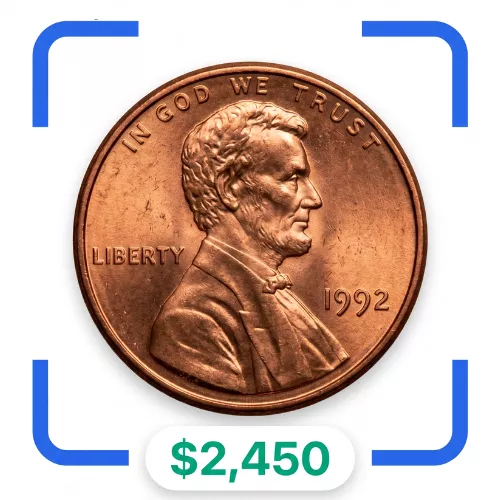


The United States Mint struck this penny in 1961 at the main facility in Philadelphia.
It belongs to the long-running Lincoln Cent series and features the Lincoln Memorial design on the reverse.
The mint struck these coins in a traditional bronze alloy that is ninety-five percent copper.
Because it came from Philadelphia, the coin carries no mint mark beneath the date.
Finding an early Memorial cent from this era with its original bright red color intact is not easy.
Most of them toned over time or suffered heavy damage right after they left the coin presses.
A stunning example of this coin sold for $7,475 at Heritage Auctions.
The sale took place in January 2005.
Professional coin graders certified the penny at the extraordinary grade of MS-67 Red.
The MS stands for Mint State, which means the coin never circulated in daily commerce.
The number 67 represents a near-flawless surface with exceptional visual appeal and almost no distracting marks.
The Red designation means the coin retains at least ninety-five percent of its original bright copper luster.
A price like this happens only when top collectors compete for the finest known specimens.
A typical 1961 penny found in pocket change will not bring anywhere near this amount.
The Philadelphia Mint produced a huge number of pennies in 1961.
Raw mintage numbers do not tell the whole story for modern copper coinage.
The mint used heavy machinery to count, bag, and transport these coins in massive bulk.
Heavy canvas bags caused fresh pennies to collide violently against one another.
These rough handling practices left deep nicks, gouges, and contact marks on nearly every piece.
Copper is also a very reactive metal that oxidizes quickly when exposed to air and moisture.
Over the decades, the vast majority of these pennies turned brown or developed dark spots.
Finding an early 1960s Philadelphia cent that escaped both physical hits and surface oxidation is extremely rare.
Serious registry set collectors pay massive premiums for condition rarity like this.
Start by looking closely at the date on the front right side of the coin.
Confirm the date reads 1961 with completely blank space underneath it.
If you see a small letter D below the date, the coin came from Denver instead of Philadelphia.
Check the weight of the coin on a small digital scale to confirm it weighs roughly 3.1 grams.
Hold the coin under a bright direct light and inspect the color of the copper.
A true Red coin must show vibrant, shiny orange-red luster across both sides without dull brown patches.
Use a 5x or 10x magnifying glass to look for scratches, bag hits, or carbon spots on Lincoln's cheek and the flat fields.
To qualify for a high grade, the surfaces must remain practically spotless under close magnification.
If you want a quick opinion before buying special tools, scan the coin with Coin Value Checker to get a baseline reading on its features.
Remember that worn or dark pennies from your change are common pocket change, while record prices belong strictly to certified gem specimens.
Want the value without the research? Start with this comparison of every free coin identifier apps worth trying.
Upload a photo and get an instant value, grade estimate, and error check — no jargon, no sign-up required.