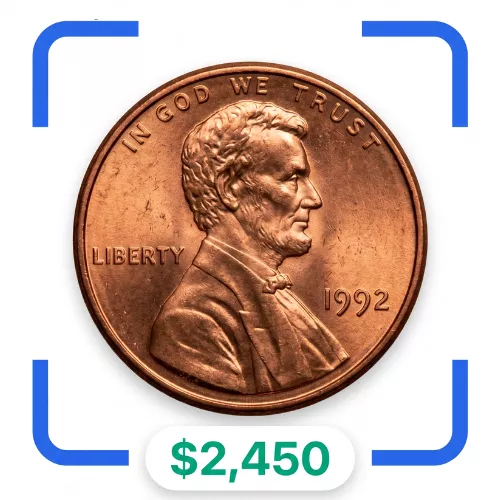


The Denver Mint struck this Lincoln Cent back in 1962.
It comes from the early years of the Lincoln Memorial reverse design.
The coin was made from a traditional bronze copper alloy rather than modern zinc.
Billions of pennies left the mint facilities during the early 1960s.
Most of these pennies entered daily trade and quickly wore down.
Finding a standard 1962-D penny in your pocket change is quite common.
Finding an example that looks like it just dropped from the dies is another story.
This particular coin represents one of the finest known survivors of the issue.
An exceptional example of the 1962-D cent sold through David Lawrence for $12,000 in May 2013.
Professional coin graders certified the penny at an extraordinary MS-67 Red grade.
The MS-67 designation stands for Mint State 67 on the standard 70-point grading scale.
This means the coin shows zero trace of wear from circulation.
It also means the surfaces have virtually no contact marks or scratches from heavy handling.
The "RD" or Red label indicates that the coin retains its full original copper color.
Top-tier collectors compete fiercely whenever a specimen at this grade level appears at public auction.
The value of this penny comes entirely down to condition rarity.
The Denver Mint did not produce this coin as a special limited edition.
Instead, millions of these coins were tossed into heavy canvas bags and shipped across the country.
Decades of sitting in bulk rolls and bags left most coins covered in spots, nicks, and dings.
Copper also reacts quickly with air and moisture over time.
Most 1962-D cents turned brown or spotted long ago.
A coin that survived without surface damage while keeping its bright orange-red luster is a true freak of survival.
Registry set collectors want the single finest known coin for their collections, which drives prices to record heights.
Start by checking the date on the front of the coin below Lincoln's bust.
Look for the small "D" mint mark beneath the date 1962.
Weigh the coin on a small digital scale to make sure it reads roughly 3.1 grams.
Examine the coin under a bright desk lamp with a 5x or 10x magnifying glass.
You need to see strong mint luster that spins across the fields like the spokes of a wheel.
Check the surfaces closely for tiny brown carbon spots, hairline scratches, or bag marks.
Even a single small nick on Lincoln's cheek will drop a coin far below the MS-67 grade level.
If you want a fast way to check basic details on older pennies, tools like CoinKnow or Coin Value Checker can help you scan coins with your phone.
Remember that worn or brown pocket change will not carry this kind of price tag.
A coin must hold genuine high-grade certification to bring anywhere near record money.
For an instant read on what your coin is worth, see this comparison of every free coin identifier apps worth trying.
Upload a photo and get an instant value, grade estimate, and error check — no jargon, no sign-up required.