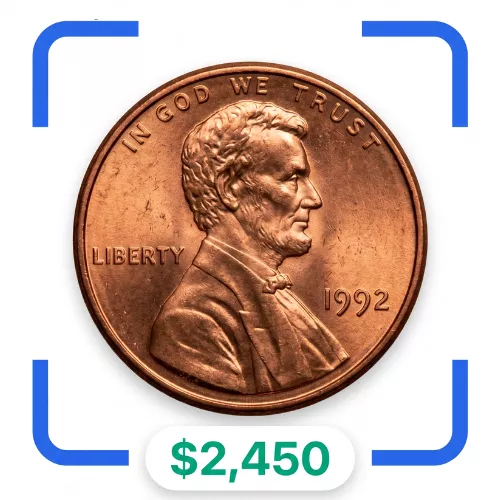


The Lincoln cent series has plenty of famous dates, but the 1964 SMS penny is one of the strangest.
The Philadelphia Mint struck this coin in 1964, so it carries no mint mark.
Most pennies from that year are ordinary business strikes meant for everyday change.
This particular coin is different because it belongs to an unofficial group known as Special Mint Set pieces.
The United States Mint was dealing with a massive national coin shortage in 1964.
To help solve the problem, the Mint paused making traditional proof sets for collectors.
Official Special Mint Sets were not released to the public until 1965.
Still, a very small number of experimental 1964 coins made it outside the Mint with special surfaces and strikes.
This specimen is made of standard bronze alloy and retains its full original red color.
Top-tier examples of this mystery variety bring serious money when they cross the auction block.
One outstanding example graded SP-67 Red sold for $19,200.
Heritage Auctions handled the sale in January 2025.
The SP grade stands for Specimen, which means the coin was produced with special care instead of normal mass production.
The 67 rating places it near the top of the numerical grading scale, showing almost no flaws or contact marks.
The RD designation confirms that the copper surface still shows full, bright original red color.
Prices at this level happen only because the coin was certified and authenticated by a major grading service.
A typical pocket change find will not sell for this kind of money.
The US Mint never officially acknowledged making Special Mint Set coins in 1964.
Despite the lack of official records, a handful of these pieces exist in the coin community.
They clearly show different surface characteristics than regular 1964 pennies.
The strikes are much sharper, and the flat fields are much smoother than normal coins from that year.
Experts believe these coins were part of an experimental production run to test equipment for upcoming mint sets.
Because so few were made, surviving examples are exceptionally rare.
Collectors who try to assemble complete sets of Lincoln cents need one of these pieces to finish their collection.
The combination of mystery, extreme scarcity, and intense collector demand keeps prices very high.
You need to look closely if you want to tell a 1964 SMS cent apart from a standard 1964 penny.
Start by checking the date on the front to make sure it reads 1964 with no mint mark below the date.
Use a 10x magnifying glass or a loupe to inspect the design details on Lincoln's portrait.
A true SMS piece displays razor-sharp hair lines, a crisp coat lapel, and distinct lettering.
The flat background areas, known as the fields, look smooth and clean without the rough texture seen on standard strikes.
Look at the way the metal reflects light across the surface.
A regular business strike has bright cartwheel luster that spins as you tilt the coin.
An SMS coin has a smooth, satin-like finish instead of that cartwheel effect.
People often confuse well-preserved pocket change or proof coins with an SMS penny.
If you want a quick starting point, a mobile tool like Coin Value Checker can help you take a closer look before seeking a professional opinion.
Grading services like PCGS label these special coins as SP instead of MS, so expert authentication is necessary to prove what you have.
If you have the coin in hand right now, which free coin identifier apps is worth installing can price it immediately.
Upload a photo and get an instant value, grade estimate, and error check — no jargon, no sign-up required.