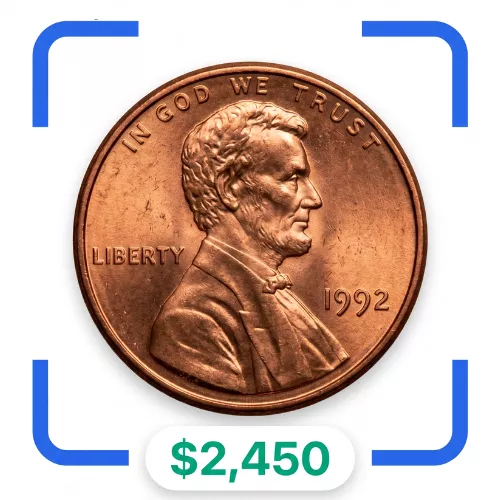


The United States Mint did not produce traditional proof sets between 1965 and 1967.
Instead, the government made Special Mint Sets for collectors.
These coins are often called SMS coins for short.
The Mint struck this 1967 Lincoln Cent in Philadelphia.
You will not find a mint mark on the coin because of how coins were produced during this period.
The dies used for these sets received better preparation than standard business strike dies.
This gave the pennies a distinctive satin texture that sits between a regular circulation strike and a true proof coin.
Most of these coins show a simple, flat sheen across the entire surface.
Only a tiny fraction came off freshly polished dies with strong visual contrast.
A top-tier example of this penny made headlines on the auction block.
The coin sold for a massive $5,581.
Heritage Auctions handled the sale in June 2014.
Professional coin graders certified the penny at the grade of SP-68 Cameo.
The "SP" stands for Special Strike, which applies to SMS coins.
The 68 score means the coin is nearly flawless, with only microscopic imperfections that you need high magnification to spot.
The "CAM" label means the raised parts of the design show a distinct frosty appearance against smoother background fields.
Serious collectors will pay huge sums when a coin combines an elite grade with that special cameo contrast.
High grade alone does not explain the four-figure price tag.
Condition rarity and die state are the real drivers here.
Workers at the Mint did not treat SMS dies with the heavy sandblasting used on modern proof coinage.
Because of that, the frosty texture wore away after striking just a few sheets of planchets.
Finding a 1967 SMS penny with true Cameo contrast is genuinely difficult.
The frosting on this piece is clearly visible on the portrait and lettering, though it falls short of a Deep Cameo rating.
A grade of SP-68 CAM puts this exact piece among the very finest known survivors for the date.
Copper also reacts easily with air, moisture, and original packaging materials over time.
Most 1967 cents developed spots, haze, or discoloration over the decades.
To survive in near-perfect condition with bright red surfaces and sharp cameo contrast is an extreme exception.
Keep in mind that typical coins found in your change or in loose sets are worth only a few cents to a few dollars.
You can inspect your own 1967 cents by following a few clear steps.
First, check the date on the front right side below Lincoln to confirm it reads 1967.
Look below the date to make sure there is no mint mark letter.
Next, tilt the coin under a single direct desk lamp.
You are looking for two different surface textures on the same coin.
The flat background fields should look smooth and reflective.
The raised details, including Lincoln's portrait and the Lincoln Memorial on the back, should look milky, white, or frosted.
If the entire coin looks uniform and shiny, it is a standard SMS coin without the Cameo status.
Use a 5x or 10x jeweler's loupe to inspect the surfaces for any tiny scratches, contact marks, or carbon spots.
To get a quick read on what you have, you can take a clear photo and run it through CoinKnow or the Coin Value Checker app.
These tools help you figure out if your coin is a standard pocket change piece or an original Special Mint Set strike.
If your coin shows intense contrast and clean surfaces, consider submitting it to a professional grading service for certification.
If you just want a quick number without the guesswork, see which free coin identifier apps is worth installing.
Upload a photo and get an instant value, grade estimate, and error check — no jargon, no sign-up required.