

The United States Mint faced a massive coin shortage in the mid-1960s.
To keep collectors from hoarding new coins, the Mint stopped making traditional proof sets.
They also removed mint marks from all coins starting in 1965.
Instead of proof sets, the government offered Special Mint Sets to the public.
These sets contained coins struck with higher pressure on specially cleaned blanks.
The 1967 issue marked the final year of this temporary program.
Every 1967 Lincoln cent came from the Philadelphia Mint without a mint mark.
While regular pocket change looked dull, these special coins carried a distinct satin look.
Copper collectors pay close attention to coins that kept their original bright red color.
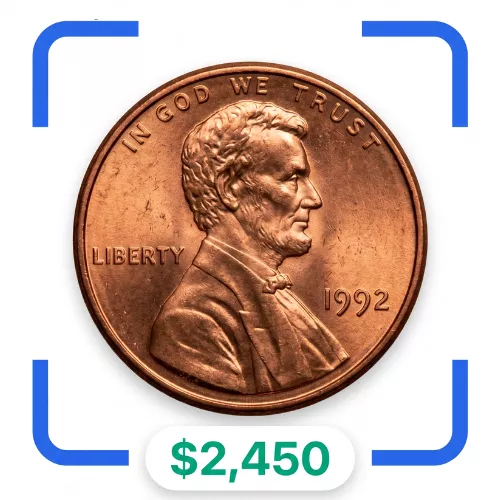
This particular piece belongs to the Lincoln cent series and carries the full red designation.
High-grade examples of these special strikes can bring substantial sums at major sales.
A top-tier 1967 Lincoln cent sold through Heritage Auctions for $7,820.
The transaction took place in January 2008.
Professional Coin Grading Service examined the coin and assigned it a grade of SP-68 Red.
The letters SP stand for Specimen, which designates coins with special strikes rather than regular business strikes.
A grade of 68 means the coin is almost flawless under magnification.
You will struggle to find any visible contact marks or spots on a piece at this level.
The red color code means the coin retains nearly all of its original copper glow from the day it was struck.
Bidders competed aggressively because finding this date in such clean condition is very difficult.
Condition rarity is the biggest factor behind this coin's market value.
Millions of Special Mint Sets were sold to collectors in 1967.
However, the packaging used by the Mint did not always protect the copper over long periods.
Copper reacts quickly with air, moisture, and chemical packaging materials.
Most 1967 cents developed dark spots or faded to a brown shade over the decades.
Finding a specimen that kept its bright red luster without turning brown is unusual.
An SP-68 Red grade places this coin among the finest known specimens for the entire date.
The year 1967 was also the end of an era, as standard proof production resumed in 1968 at San Francisco.
Advanced registry set collectors need the finest possible examples to complete their collections.
When two or more serious collectors want the same top-grade coin, prices climb quickly.
You can check your own coins by looking for a few specific details.
First, check the date on the obverse to make sure it reads 1967.
There should be no mint mark beneath the date on any genuine piece.
Look at the surface texture under a strong light and a 10x jeweler's loupe.
A standard pocket change cent has rougher fields and soft details on Lincoln's hair and jacket.
A Special Mint Set coin features smoother, satin-like fields and much sharper strike lines.
Check the color of the copper across both sides of the coin.
True red coins show a bright orange-copper luster without dark carbon specks or haze.
It is easy to confuse a very clean regular strike with a specimen strike if you are new to the hobby.
You can use Coin Value Checker to scan your coin and get a quick first assessment of what you have.
If you suspect you have an ultra-clean specimen strike, consider submitting it to a professional grading service for authentication.
Want to check a whole jar of coins quickly? which free coin identifier apps is worth installing makes that practical.
Upload a photo and get an instant value, grade estimate, and error check — no jargon, no sign-up required.