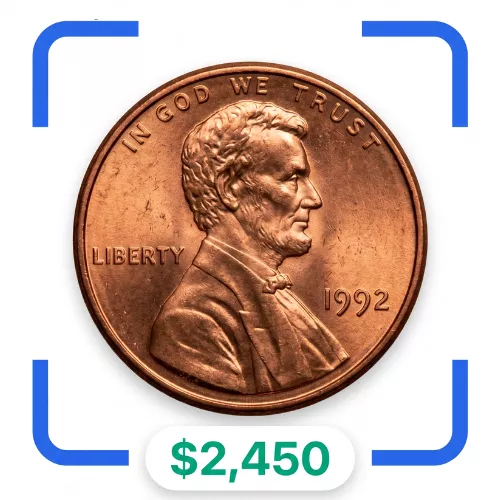


The United States Mint struck this Lincoln cent in 1968.
It was made at the main facility in Philadelphia.
Because it came from Philadelphia, there is no mint mark below the date.
The coin is made of standard bronze, which is mostly copper.
It weighs 3.1 grams and features the classic portrait of Abraham Lincoln on the front.
The reverse displays the Lincoln Memorial design.
The Mint produced a huge number of pennies during the late 1960s to keep up with commerce.
Most of those coins went straight into daily circulation and picked up heavy wear.
Finding an uncirculated piece that still looks brand new is a different story.
One special 1968 cent caught the attention of serious collectors.
Stack's Bowers sold this coin at auction in August 2018.
The winning bidder paid $2,880 to take it home.
The coin earned a grade of MS-67 Red from a professional grading service.
MS stands for Mint State, which means the coin never circulated in pocket change.
The 67 rating is near the top of the standard 70-point grading scale.
The Red designation means the coin retains nearly all of its original bright copper color.
Coins at this level show virtually no contact marks or scratches from handling.
A certified grade gives buyers confidence in the preservation quality of the piece.
The high price comes down to what collectors call condition rarity.
Billions of pennies were struck in the late 1960s, so raw examples are very common.
However, the quality of coin production during this era was often sloppy.
Dies were used past their prime, and coins were dumped roughly into large storage bins.
Most 1968 pennies left the mint with small nicks, planchet flaws, or dull surfaces.
Copper is also a reactive metal that tarnishes quickly when exposed to air and moisture.
Over time, bright red copper naturally turns brown or develops dark spots.
Surviving for decades with full original red luster and almost flawless surfaces is truly unusual.
Set registry collectors compete aggressively for the highest-graded coins from every date.
When an MS-67 Red example appears at auction, buyers are willing to pay top dollar for it.
You can start by looking closely at the date on the front of your coin.
Check the space beneath the 1968 date to confirm there is no mint mark.
If you see a small D or S, the coin was struck in Denver or San Francisco instead.
You can use a basic 5x or 10x magnifying glass to inspect the coin under good light.
Look at the color across both the portrait and the Lincoln Memorial on the back.
A true Red coin should show vibrant, bright copper color across at least ninety-five percent of its surface.
If the coin looks brown or reddish-brown, it will not carry the full Red designation.
Check the high points of Lincoln's cheek and shoulder for any signs of friction or dull gray rubbing.
Also look for tiny bag marks or carbon spots scattered across the fields.
If you have a large pile of pocket change and want a quick scan, you can use Coin Value Checker to get your bearings.
Keep in mind that ordinary pennies pulled from circulation will not be worth thousands of dollars.
Record prices belong only to coins that have been professionally graded in exceptional Mint State condition.
If the details are more than you need, our roundup of the best free coin identifier apps options keeps it simple.
Upload a photo and get an instant value, grade estimate, and error check — no jargon, no sign-up required.