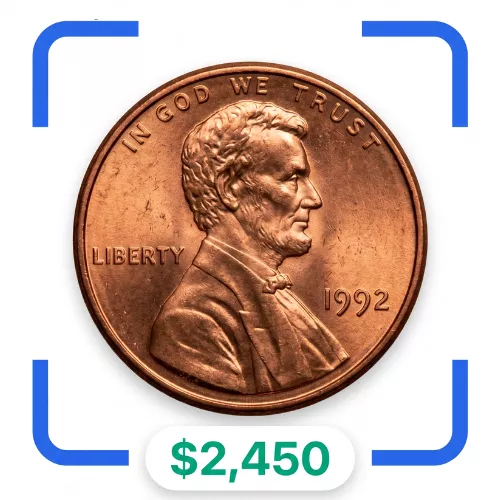


The Denver Mint struck millions of Lincoln pennies in 1969.
These coins feature the classic bust of Abraham Lincoln on the front and the Lincoln Memorial on the back.
The United States Mint made these cents out of a traditional copper alloy weighing 3.1 grams.
Most pennies from this year went straight into everyday circulation.
People spent them in stores, tossed them into jars, and let them wear down over time.
Finding a common 1969-D cent in your change is still very easy.
Finding one that survived in flawless, mint-state condition is a completely different story.
This date stands out because high-grade survivors with original color are extremely hard to find.
Heritage Auctions sold a top-quality 1969-D Lincoln cent in September 2012.
The winning bidder paid $8,625 to take the penny home.
Professional coin authenticators certified this specific coin at the grade of MS-67 Red.
The letters MS stand for Mint State, which means the coin never circulated in pocket change.
The number 67 represents a near-perfect coin with almost no contact marks or visual flaws.
The Red designation means the copper kept at least 95 percent of its original bright factory luster.
Collectors compete fiercely for coins at this strict grading tier.
That strong bidding pushed this regular Denver cent to its record price.
The high price tag comes down to condition rarity rather than a low mintage.
The Denver Mint produced huge quantities of cents in 1969.
During the late 1960s, the mint transported new coins in heavy canvas bags.
Freshly struck pennies banged against each other during sorting and shipping.
This rough handling left nicks, scratches, and dings on almost every single piece.
Copper is also a very reactive metal that tarnishes easily over time.
Exposure to moisture and air turns bright copper to brown or spotty shades.
Because of these factors, almost no 1969-D cents survived without bag marks or surface damage.
Finding an example that kept its bright red color and spotless surfaces is nearly unheard of.
Registry set collectors need the highest possible grades to build top-ranked sets.
When an MS-67 Red example appears on the market, serious buyers are willing to pay top dollar.
You can check your own coins at home with a few simple steps.
Look below the date on the front of the coin for a small "D" mint mark.
That letter shows the coin was made in Denver.
Do not confuse this regular Denver strike with the famous 1969-S doubled die penny.
The Denver coin has no doubled lettering and gains its value purely from its physical condition.
Place the coin under a strong desk lamp and use a 10x magnifying glass to inspect the surfaces.
Check Lincoln's cheek, shoulder, and the open fields around his portrait for tiny scratches or spots.
The coin must show full, bright orange-red luster without any brown toning or dark fingerprints.
If you want a fast way to check your change, you can scan the coin with CoinKnow or Coin Value Checker on your phone.
A quick photo with an app helps you confirm the date and mint mark before you look closer.
Remember that worn or brown coins pulled from pocket change are only worth face value.
Only a certified, mark-free MS-67 Red penny can reach thousands of dollars at auction.
For a quick keep-or-spend decision, the free coin identifier apps picks that held up in testing helps.
Upload a photo and get an instant value, grade estimate, and error check — no jargon, no sign-up required.