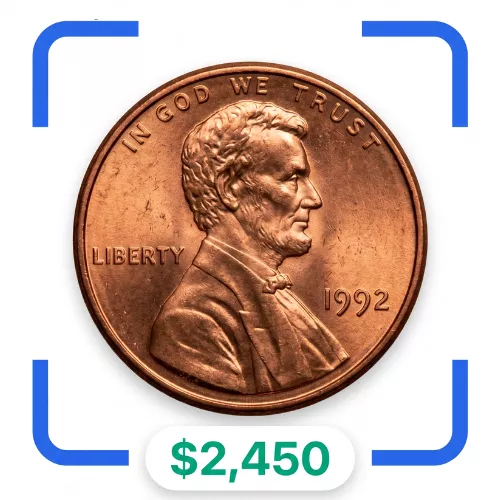


The Denver Mint struck millions of Lincoln cents in 1972.
Each standard piece from that run contains 95 percent copper and weighs 3.1 grams.
Most of these pennies entered daily circulation immediately.
People spent them on newspapers, candy, and bus fare.
Because they saw heavy use, almost all of them picked up scratches, stains, and heavy wear.
Finding an ordinary 1972-D penny in your pocket change is quite common.
Finding one that looks just as fresh as the day it left the coin press is a completely different story.
The "RD" label stands for Full Red, which means the copper still holds its original bright orange luster.
A pristine example of this regular Denver issue made waves when it crossed the auction block.
The piece sold for $4,250 in an eBay Auction on 3/12.
Professional coin graders certified the penny at an extraordinary MS-67 Red grade.
Mint State 67 represents near perfection for a business-strike coin.
On a piece with this rating, you will see virtually no contact marks, hairline scratches, or carbon spots.
The strike is sharp, and the original copper color shines across both sides.
High-end registry set collectors compete aggressively for pieces in this top tier.
That intense bidding is how a standard pocket coin reached thousands of dollars.
Many collectors hear about 1972 pennies and think of the famous doubled die variety.
That famous Philadelphia error shows dramatic doubled letters and numbers on the front.
This Denver piece is entirely different because it is a regular strike with no design errors.
Its high market value comes down strictly to condition rarity.
Copper reacts easily to moisture, oxygen, and skin oils.
Over the decades, bright red copper naturally oxidizes and turns brown.
Minting machinery in the early 1970s also produced plenty of coins with weak details and bag marks.
Very few raw 1972-D cents survived in flawless, untouched condition.
When an example survives with flawless surfaces and full red luster, serious buyers pay top dollar for it.
You can check your own coins at home with a few simple steps.
First, look at the front of the coin directly below the date of 1972.
You should clearly see a small "D" mint mark representing the Denver facility.
Next, use a standard magnifying glass or a 5x jeweler loupe to check the lettering.
Look at the words "LIBERTY" and the motto "IN GOD WE TRUST" along the rim.
A regular strike like this one shows crisp, single lines without any shifted or doubled lettering.
If you have a pile of old pennies to sort through, a phone app like Coin Value Checker can help you do a quick first pass.
Pay close attention to the surface color and quality under good lighting.
To qualify for the Red designation, the coin must show at least 95 percent of its original bright copper color.
Brown or faded pennies from circulation do not carry this type of premium.
Only independently certified coins with pristine MS-67 surfaces will ever approach record auction prices.
For anyone who just wants the value, this comparison of every free coin identifier apps worth trying is the fast lane.
Upload a photo and get an instant value, grade estimate, and error check — no jargon, no sign-up required.