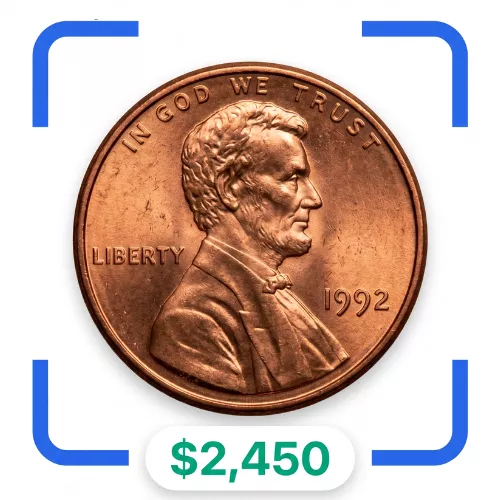


The Philadelphia Mint struck this famous Lincoln cent variety back in 1972.
Pennies made in Philadelphia do not carry a mint mark below the date.
This particular coin is struck on a standard bronze planchet with full original red color.
Collectors know it as a Doubled Die Obverse, often shortened to DDO.
It ranks number 13 on the list of top 200 most valuable pennies.
While the Mint produced billions of cents that year, only a small batch received this distinct error.
The doubling happened during the die preparation process before any blanks were stamped.
One exceptional example sold for $14,400 through Heritage Auctions.
The winning bid crossed the block in June 2019.
Professional coin graders certified the piece in Mint State 67 Red, or MS-67 RD.
A Mint State 67 grade means the coin has almost no contact marks or flaws.
The Red designation means it kept nearly all of its bright, fiery copper luster from the day it was struck.
Coins of this quality rarely appear at public auction.
High grades bring fierce bidding wars because Registry Set collectors compete for the finest known specimens.
A common, worn example will never bring this price, but top-grade survivors command serious money.
This piece is widely called the poster child for modern Lincoln cent doubled dies.
It is one of the most dramatic error coins in the entire history of the Lincoln series.
The doubling on the front of the coin is extreme and impossible to miss.
Most minor doubled dies require a microscope to detect, but this one stands out instantly.
Serious copper specialists consider it a key centerpiece for any advanced collection.
Copper is a chemically active metal that darkens and spots easily over time.
Finding a fifty-year-old bronze cent with pristine surfaces and bright red color is genuinely tough.
When you combine that intense visual doubling with an almost perfect preservation state, prices soar.
You do not need heavy magnification to spot a genuine 1972 doubled die.
First, check the front of the coin right below the date to confirm there is no mint mark.
Look closely at the numbers in the date 1972.
You will see a secondary image strongly shifted toward the south on every single digit.
Next, inspect the word LIBERTY on the left side of Lincoln's bust.
The letters show obvious, clear separation between the primary and secondary strikes.
The motto IN GOD WE TRUST across the top rim also displays noticeable spread.
If you want a fast way to double-check your pocket change, Coin Value Checker can scan your coin and give you a quick first look.
Be careful not to confuse this variety with common mechanical doubling, which looks flat and shelf-like.
A true doubled die features raised, rounded letters with split serifs on the corners.
Always hold the coin under a steady light source and tilt it slightly to check the lettering crispness.
The simplest way to get a ballpark value is to photograph the coin — see the free coin identifier apps picks that held up in testing.
Upload a photo and get an instant value, grade estimate, and error check — no jargon, no sign-up required.