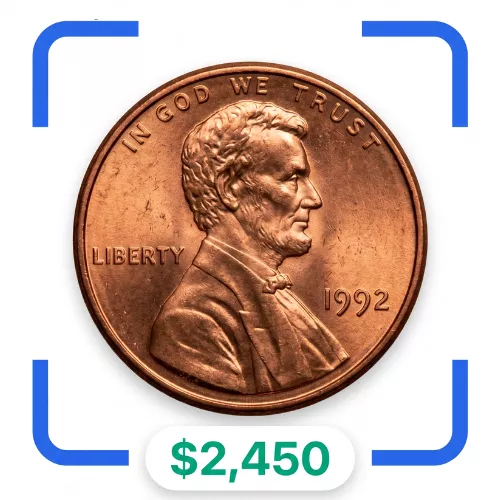


The Philadelphia Mint struck this Lincoln Cent in 1976.
Coins made in Philadelphia that year carried no mint mark beneath the date.
The year 1976 marked the United States Bicentennial.
The Mint created special reverse designs for the quarter, half dollar, and dollar coins that year.
The Lincoln Cent did not get a special design for the celebration.
It kept the standard Lincoln Memorial design on the reverse.
These pennies were made from a traditional bronze alloy rather than modern zinc.
Collectors refer to pieces that keep their full, bright copper color as Red or RD coins.
Billions of these cents were made for circulation, but finding one in pristine condition is very difficult.
Heritage Auctions sold an exceptional 1976 cent in January 2005.
The coin sold for a record price of $10,350.
A major third-party grading service certified the piece as MS-67 Red.
The MS stands for Mint State, which means the coin never circulated in pocket change.
The number 67 sits very close to the top of the standard 70-point grading scale.
At MS-67, a coin displays brilliant original luster with only tiny, microscopic contact marks.
The RD designation confirms that the copper surface never darkened or toned over time.
Top collectors compete fiercely when a piece this clean comes to the auction block.
Bidders pushed the price past ten thousand dollars because a duplicate grade is so tough to find.
The 1976 cent is not a rare date by mintage numbers alone.
Millions of people saved Bicentennial coins directly from circulation.
Most of those saved coins suffered from poor strikes, bag marks, or carbon spots.
Copper reacts easily with moisture and oxygen in the air.
Over several decades, most raw copper pennies turn brown or develop dark stains.
Heavy machinery banged fresh coins together as they fell into massive storage bins at the Mint.
Finding a 1976 cent that escaped both handling marks and environmental damage is almost impossible.
This coin is a classic example of condition rarity.
Condition rarity means the date is common, but the specific high grade is extraordinarily scarce.
Registry set collectors want the finest known example for every single year in the Lincoln Cent series.
That constant demand from registry builders drives high prices for flawless modern coins.
You can check your pocket change or old rolls for this specific date.
First, look at the date on the right side of Lincoln's portrait.
The coin must show the year 1976 with no letter underneath it.
A blank space below the date confirms the coin came from the Philadelphia Mint.
If you see a small D below the date, the Denver Mint struck that piece instead.
Next, examine the color of the metal under good lighting.
A valuable specimen must show bright, original reddish-orange luster across both sides.
If the coin looks chocolate brown or dull red, it cannot earn the strict Red designation.
Use a 10x jeweler's loupe to inspect Lincoln's cheek, shoulder, and the open fields.
Look for tiny scratches, nicks, or black spots on the copper surface.
An MS-67 coin will have almost no visible flaws even under direct magnification.
You can use CoinKnow or Coin Value Checker to get an initial read on the date and strike.
A quick phone scan helps you decide if a coin is worth a closer look with a loupe.
Keep in mind that typical circulated 1976 pennies are only worth their face value or small copper melt value.
Only certified, nearly flawless examples will ever bring record-setting auction prices.
For a hands-off estimate, take a look at the free coin identifier apps picks that held up in testing.
Upload a photo and get an instant value, grade estimate, and error check — no jargon, no sign-up required.