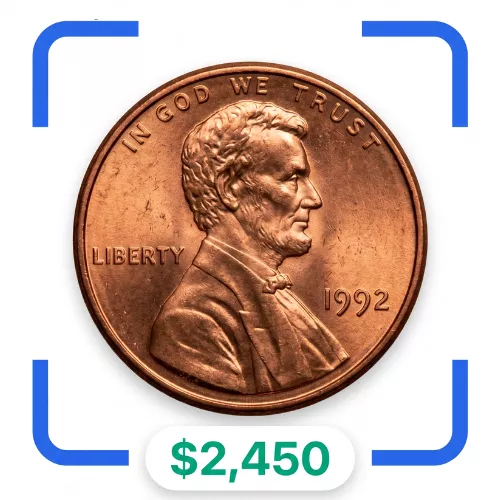


The Denver Mint struck this Lincoln cent back in 1979.
It belongs to the long-running Lincoln penny series that collectors still love today.
During this era, the United States Mint still made pennies out of a traditional copper alloy.
The Denver facility pumped out billions of these coins for everyday pocket change.
Workers handled them quickly and packed them tightly into heavy canvas bags.
Because of that rough treatment, almost every piece picked up small nicks and scratches right away.
Finding one today that survived without any major flaws is a serious challenge.
A top-quality example of this coin made big news when it crossed the auction block.
The coin sold through Heritage Auctions in February 2016.
When the bidding ended, the final price reached an impressive $3,995.
A professional grading service certified the coin at an extraordinary MS-67 grade.
The "MS" stands for Mint State, which means the coin never circulated in daily commerce.
The 67 rating means the coin shows almost no contact marks, hairline scratches, or striking flaws.
It also earned the "RD" designation, which stands for full Red color.
A certified grade like this tells buyers that the surfaces and original mint shine are authentic.
That level of independent verification is what drives serious collectors to spend thousands of dollars.
This coin is a classic example of what numismatists call a condition rarity.
The Denver Mint made billions of pennies in 1979, so the date itself is not rare at all.
You can easily find worn 1979-D cents in regular change for just face value.
The extreme value comes entirely from how well this specific piece was preserved.
Copper reacts quickly with air, moisture, and skin oils over time.
Most 1979 copper pennies turned brown or spotted decades ago.
Almost none survived with flawless, blazing red luster straight from the dies.
Top-tier registry set collectors compete fiercely whenever an MS-67 Red example appears.
That strong collector demand creates high prices for the very best surviving specimens.
You can start checking your own coins by looking closely at the date and mint mark.
Look on the front of the penny, right below the date 1979.
You should see a small "D" stamped beneath the numbers, which shows it came from Denver.
Next, you need to verify that your coin is made of the original copper alloy.
A standard 1979 copper cent should weigh right around 3.1 grams on a small digital scale.
Use a 5x or 10x jeweler's loupe to inspect the surfaces under a good light source.
Check Lincoln's cheek, jawline, and coat for tiny hits or signs of wear.
Look across the flat fields of the coin to make sure there are no carbon spots or fingerprints.
The coin must show full, bright orange-red luster across both sides to qualify for the Red label.
If you have a pile of change and want a fast first check, you can snap a photo with Coin Value Checker or CoinKnow on your phone.
Keep in mind that typical pocket change finds will not grade MS-67.
Only a coin that looks nearly perfect under magnification will have a shot at setting big records.
Skip the cross-referencing entirely and see this comparison of every free coin identifier apps worth trying.
Upload a photo and get an instant value, grade estimate, and error check — no jargon, no sign-up required.