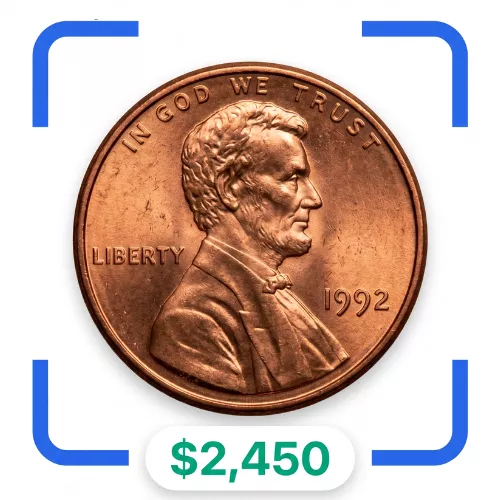


The Denver Mint struck this Lincoln Cent in 1981.
You can identify it by the small D mint mark below the date on the front.
This issue holds a special place in modern coin history because of its metal makeup.
It represents the final full year that the US Mint produced pennies using a traditional 95 percent copper alloy.
In 1982, the Mint switched to cheaper copper-plated zinc planchets to save on production costs.
Because copper reacts easily with air and moisture, finding an original 1981-D piece in flawless mint condition is quite tough.
Most of these pennies quickly turned brown or developed spots after entering pocket change.
Heritage Auctions sold a top-grade specimen of this coin in January 2017 for $5,170.
The coin was certified by professional graders at the grade of MS-67 Red.
The MS stands for Mint State, which means the coin never circulated in daily trade.
The number 67 represents a near-perfect strike with almost no contact marks or bag scratches.
The RD designation means the coin retains over 95 percent of its original fiery copper luster.
Auction bidders competed fiercely for this piece because certified survivors at this tier are exceedingly rare.
Regular pocket change will never reach this value without that level of pristine preservation.
The value of this particular coin comes entirely down to condition rarity.
The Denver Mint produced billions of pennies in 1981, so the date itself is very common.
However, heavy production speeds caused most planchets to pick up dings and scuffs before leaving the mint.
Storage in damp paper rolls also caused the raw copper to oxidize into dull brown or red-brown shades.
A specimen that survived for decades without milk spots, carbon spots, or finger oils is an outlier.
Registry set collectors want the highest-graded example possible to boost their collection rankings.
When two or more dedicated collectors target a single high-grade piece, the auction price shoots upward.
You should start by checking the date on the right side of Abraham Lincoln's portrait.
Look right below the 1981 date to make sure you see the clear D mint mark.
You can place the coin on a precise digital scale to verify that it weighs around 3.1 grams.
A 3.1-gram weight confirms the heavy copper alloy instead of the lighter zinc used in later years.
Next, use a 10x jeweler's loupe to inspect the coin's surfaces under a good light source.
Check the cheek, jawline, and coat on the front for tiny contact marks or hairline scratches.
Turn the coin over and inspect the Lincoln Memorial columns on the back for strike softness or flat spots.
Make sure the coin has bright, glowing orange-red color across both sides with zero dark spots.
If you want a quick first check on your coin, you can scan it using Coin Value Checker to see where it fits.
Keep in mind that typical pocket change coins are brown and worn, which leaves them worth face value.
Only coins that earn an elite grade like MS-67 RD from a major grading service reach top market prices.
Want a value without learning grading terms first? See our roundup of the best free coin identifier apps options.
Upload a photo and get an instant value, grade estimate, and error check — no jargon, no sign-up required.