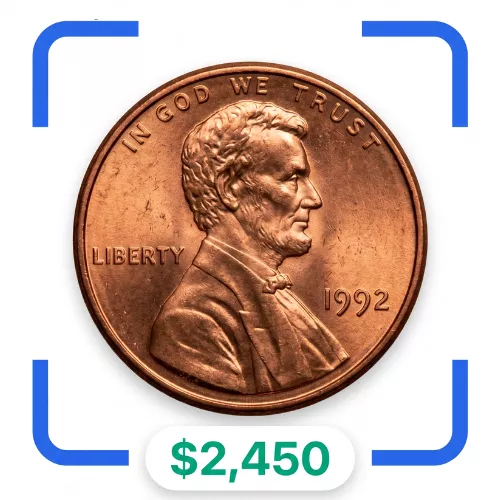


The 1981 Lincoln cent came out during the final days of the traditional copper penny.
The United States Mint struck these coins in Philadelphia out of a solid bronze alloy.
Just one year later, rising metal costs forced the Mint to switch to cheaper zinc cores.
Because of that change, the 1981 issue represents the end of an era for heavy copper cents.
Philadelphia minted billions of them for everyday change, so finding one in your pocket is easy.
Finding one preserved in pristine factory condition, however, is a completely different story.
Most of these coins went straight into circulation and picked up scratches right away.
Collectors pay big money today for the rare survivors that escaped everyday damage entirely.
A top-tier 1981 cent set an impressive price benchmark in a major online sale.
The coin sold for $3,000 in an eBay Auction held in July 2022.
Professional graders assigned this specific piece an extraordinary grade of MS-68 Red.
The "MS" stands for Mint State, which means the coin never circulated in daily commerce.
A score of 68 is near the very top of the standard 70-point grading scale.
The "Red" label means the copper kept almost all of its original bright orange glow.
Getting a regular modern penny to grade this high is incredibly difficult.
Two serious collectors wanted this coin for their registry sets and pushed the bidding up to that record price.
The value of this coin comes down to pure condition rarity.
The Philadelphia Mint did not handle regular business-strike coins with much care in 1981.
Freshly stamped cents dropped into giant steel bins, banging into each other on the way down.
Those impacts left tiny nicks, scuffs, and contact marks on almost every single piece.
Copper is also a very chemically active metal that reacts quickly with air and moisture.
Over four decades, most surviving 1981 cents turned brown or developed dark spots.
Only a tiny handful of coins survived with spotless surfaces and full original luster.
MS-68 represents the practical ceiling for 1981 Philadelphia cents.
When an elite piece like this appears on the market, advanced collectors compete aggressively to buy it.
Checking your own change requires a close look at a few specific details.
First, look at the date on the front of the coin to confirm it says 1981.
Check the space directly below the date for a mint mark.
A coin struck in Philadelphia will have no mint mark at all in that spot.
Next, you should test the weight of the coin using a small digital gram scale.
A genuine copper 1981 penny should weigh approximately 3.1 grams rather than the lighter 2.5 grams of zinc pennies.
Grab a 5x or 10x magnifying glass to inspect the portrait of Abraham Lincoln.
Look closely at Lincoln's cheek, jawline, and the open fields of the coin.
To reach an elite grade, the surfaces must be completely free of contact marks, spots, or dull film.
The metal must flash with bright, fiery orange color across both sides.
If you are not sure about the condition of your coin, you can use Coin Value Checker or CoinKnow on your phone to run a quick initial scan.
Remember that worn or brown pennies from your pocket are only worth face value.
Only a certified, virtually flawless specimen will bring thousands of dollars at an auction.
Not in the mood to compare dates and mint marks by hand? Try this comparison of every free coin identifier apps worth trying.
Upload a photo and get an instant value, grade estimate, and error check — no jargon, no sign-up required.