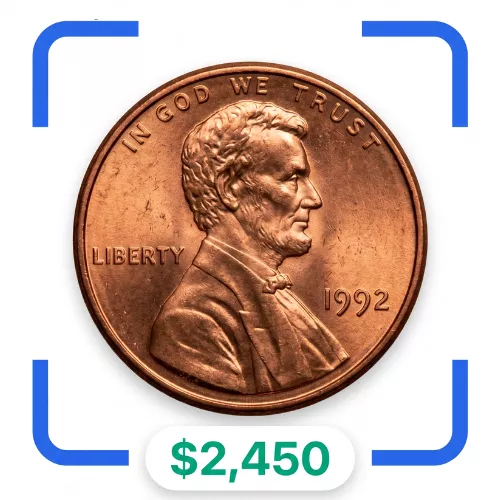


The Denver Mint struck this Lincoln cent in 1983.
By this time, the United States Mint had fully switched how it made pennies.
Older pennies were mostly solid bronze.
Starting in mid-1982, the Mint changed the core of the coin to pure zinc.
Workers then added a very thin layer of pure copper plating over the top.
This Denver issue is part of that early era of copper-plated zinc coins.
Billions of these pennies entered daily pockets and cash registers.
Most of them wore down quickly or took on ugly marks over time.
Heritage Auctions sold a top-grade example of this coin for $9,200.
The winning bid crossed the block in January 2017.
Professional coin graders certified the penny at the Mint State 68 Red level.
The Mint State scale runs all the way up to a perfect 70.
A grade of MS-68 means the coin looks almost like it did the second it left the dies.
The Red label means the surfaces kept their original, bright copper color with no fading.
Standard pocket change will never sell for this kind of money.
Only a tiny handful of verified pieces ever reach this grade tier.
This price comes down to pure condition rarity.
The Denver Mint made plenty of pennies in 1983, so the date itself is not rare.
The zinc metal core is the real challenge for collectors.
Zinc reacts easily with air, moisture, and finger oils.
Tiny bubbles and dark black spots often formed on the plating right after minting.
Over the decades, most stored examples developed ugly spots or corrosion.
Finding an MS-68 piece with perfect red luster is extremely difficult.
Registry set collectors compete fiercely whenever an example this clean goes up for sale.
You can start by looking closely at the front of your coin.
Check the date below the bust of Abraham Lincoln to confirm it says 1983.
Look directly underneath the date for the small "D" mint mark.
Weigh the coin on a small digital scale if you have one.
A zinc penny from 1983 should weigh around 2.5 grams.
To qualify for a top grade, the coin must show full copper shine with no black spots or dull patches.
Use a 10x jeweler loupe to check the surfaces for tiny nicks, scratches, or plating blisters.
If you want a fast second opinion on an uncleaned coin, you can scan it with Coin Value Checker.
Keep in mind that high auction prices only apply to certified coins with nearly flawless surfaces.
If you want to know the value before you read another paragraph, see the free coin identifier apps picks that held up in testing.
Upload a photo and get an instant value, grade estimate, and error check — no jargon, no sign-up required.