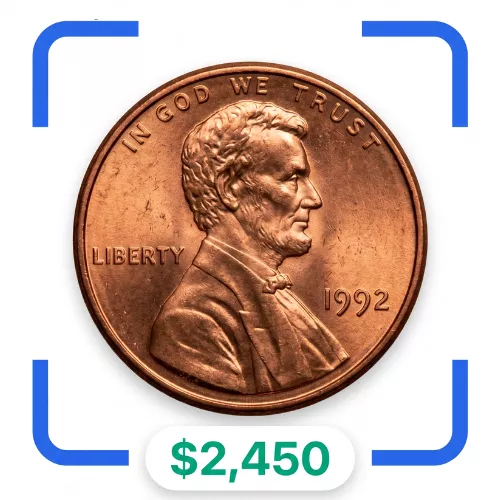


The 1983 Lincoln cent marks a fascinating moment in modern United States coinage.
The Philadelphia Mint struck this coin without a mint mark on the front.
By 1983, the Mint was making pennies primarily from zinc coated in a thin layer of copper.
This copper-plated zinc planchet gave the coins their familiar reddish look while keeping production costs down.
During the hubbing process that created the dies for this year, a mistake occurred.
A reverse die received misaligned impressions, creating one of the most famous doubled dies in the entire Lincoln cent series.
The coin you see featured here earned the Red, or RD, color designation, meaning it still shows full original copper luster.
Finding modern zinc pennies that survived without spots or corrosion makes this variety stand out among modern collectibles.
An outstanding example of this penny made headlines at a major public auction.
Stack's Bowers sold the coin in August 2019.
The winning bidder paid $10,200 for this single modern cent.
A professional grading service certified the piece at the Mint State 66 Red level.
A grade of MS-66 means the coin has never circulated in everyday commerce.
It shows only minor imperfections, retains full surface shine, and has virtually no heavy contact marks.
Prices at this level happen because certified high-grade specimens of this variety are exceedingly scarce.
Most examples discovered over the years sustained surface problems or were passed around in pocket change before anyone noticed them.
The main driver of value is the dramatic doubling on the reverse side.
Known in reference guides as FS-801, this variety serves as the primary doubled die reverse for the entire 1983 issue.
You can clearly see strong doubling across the words UNITED STATES OF AMERICA and the motto E PLURIBUS UNUM.
Very few doubled dies from the 1980s display this level of naked-eye separation.
Zinc cents are notoriously prone to plating bubbles, zinc rot, and dark oxidation spots.
Because of those metal issues, finding a top-condition survivor with pristine red color is exceptionally difficult.
Lincoln cent variety enthusiasts actively compete whenever an MS-66 Red piece appears on the market.
The combination of clear visual error appeal and top-tier condition drives the bidding well into four and five figures.
You can check your own coins by following a few simple steps.
Start by looking at the date on the front to make sure it reads 1983 with no mint mark underneath.
The coin should weigh around 2.5 grams, which confirms it uses the lighter zinc core rather than older copper composition.
Flip the coin over to the reverse side and grab a magnifying glass or loupe with 10x magnification.
Focus directly on the words UNITED STATES OF AMERICA and E PLURIBUS UNUM.
On a true doubled die, you will see distinct, raised, and rounded secondary lettering spread out from the main letters.
Do not confuse this with mechanical strike doubling, which looks flat, shelf-like, and dull.
If you want a quick check before getting professional advice, an app like Coin Value Checker or CoinKnow can help you review coin details right from your phone.
Remember that worn or damaged coins pulled from circulation will not fetch auction record prices.
Top prices belong only to well-preserved coins authenticated and graded by major grading companies.
If you just want a rough figure today, this comparison of every free coin identifier apps worth trying will do it.
Upload a photo and get an instant value, grade estimate, and error check — no jargon, no sign-up required.