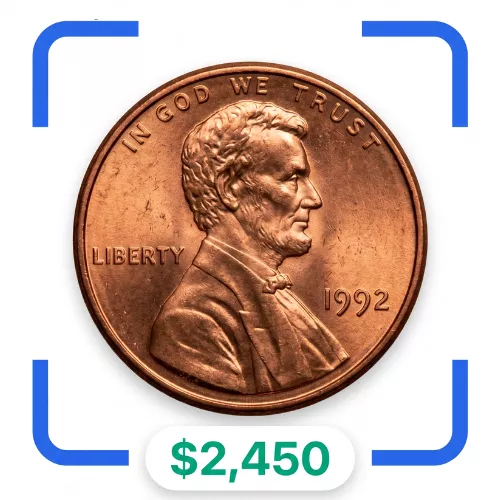


The 1984 Lincoln Cent struck in Philadelphia is usually a very ordinary pocket change piece.
Most of these pennies trade for face value or just a few cents.
However, a specific die error created one of the most famous modern Lincoln Cent varieties.
This coin is a doubled die obverse, cataloged by collectors as FS-101.
It was struck at the Philadelphia Mint with no mint mark under the date.
Collectors refer to this piece as an RD or red coin, meaning it retains its bright original copper-plated zinc luster.
It ranks at number 35 out of the top 200 most valuable coins on our list.
The clear mistake on the obverse die makes it stand out from millions of standard 1984 cents.
High-grade examples of this variety can bring substantial sums at public auction.
One exceptional piece sold for $7,638 at Heritage Auctions.
The sale took place on 8/18.
The coin was certified in MS-66 condition by a major grading service.
The MS-66 grade means the coin is in Mint State with very few marks or contact lines.
It also means the penny retained its bright red color from the day it was struck.
Finding modern pennies without spots, fingerprints, or heavy bag marks is surprisingly difficult.
Bidders competed aggressively for this piece because certified examples in such high quality rarely appear on the market.
The main driver behind the value of this coin is its dramatic die doubling.
Collectors often call this coin the Doubled Ear variety.
During die creation, the design hub shifted slightly between impressions.
This error left a distinct secondary earlobe sitting directly below Lincoln's primary ear.
Cataloged as FS-101, it has become one of the most popular modern doubled dies among collectors.
The visual appeal of the error keeps demand very strong.
Most 1984 pennies that entered circulation developed zinc rot, dark spots, or heavy wear.
Because so few preserved coins survived in clean, uncirculated red condition, the top-graded pieces command major premiums.
Collector competition for registry set pieces further drives up prices for the best known specimens.
You can check your own pennies for this variety with just a little patience.
First, confirm that your coin is dated 1984 and has no mint mark below the date.
Next, use a 10x jeweler's loupe or a basic magnifying glass to inspect Lincoln's portrait.
Focus your attention entirely on Lincoln's earlobe.
Look for a clear, raised secondary image directly beneath the main earlobe.
This distinct second ear is the signature diagnostic for the FS-101 variety.
You may also spot lighter secondary doubling on the word LIBERTY and parts of the date.
Do not confuse this with mechanical strike doubling, which looks flat and shelf-like rather than raised and rounded.
If you want a fast second opinion, you can scan the piece with Coin Value Checker to see if your coin warrants closer examination by an expert.
Keep in mind that heavily circulated pocket change examples will not bring record-setting auction sums.
Top prices like $7,638 are reserved for pristine, certified MS-66 examples with full original red luster.
If you prefer tools over tables, which free coin identifier apps is worth installing is the way.
Upload a photo and get an instant value, grade estimate, and error check — no jargon, no sign-up required.