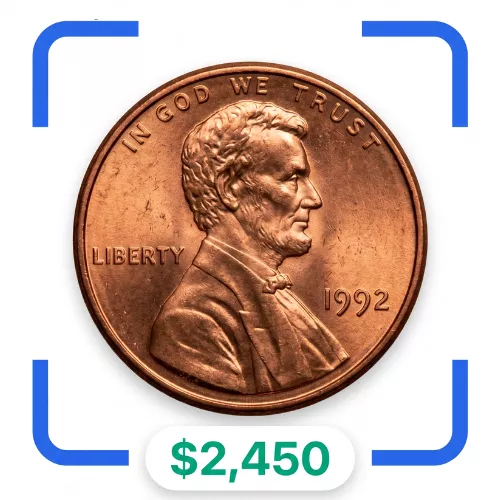


The Philadelphia Mint struck millions of Lincoln cents in 1985.
By this time, the Mint had moved away from solid bronze alloy.
These pennies were made using a zinc core coated in a thin copper plating.
You can tell a Philadelphia coin right away because it lacks any mint mark under the date.
While the coin was made for pocket change, finding one in top condition today is difficult.
The copper plating on these modern pieces reacts quickly to air and moisture.
That chemical reaction makes high-grade survivors from the mid-1980s special to collectors.
A top-quality 1985 cent crossed the auction block at Heritage Auctions in April 2017.
The winning bidder paid $5,875 for the coin.
Professional coin graders certified the penny at the grade of MS-68 Red.
The MS-68 rating stands for Mint State 68 on the standard 70-point scale.
This number means the coin has practically no bag marks or surface flaws.
The Red designation means the copper plating still shows its full original mint luster.
Collectors pay large sums for this specific coin because nearly all other examples have degraded over the decades.
Keep in mind that standard pocket change will not fetch this kind of money.
Only coins sealed in top-tier certification holders reach these auction levels.
The United States Mint produced plenty of pennies in 1985, so the date itself is not rare.
The high price tag comes entirely down to what numismatists call condition rarity.
Zinc planchets from this era often had tiny plating bubbles and trace contaminants.
Over time, these flaws cause dark spots and carbon flecks on the surfaces.
Once oxidation sets in, the coin loses its full Red color rating.
Most 1985 cents turned brown or spotted within a few years of release.
Finding a specimen that avoided all spotting and contact marks for decades is an achievement in preservation.
Registry set builders compete fiercely for these few surviving pristine coins to improve their rankings.
Check the date on the front of the coin to confirm it reads 1985.
Look directly below the date to make sure there is no mint mark letter.
A scale will confirm it weighs 2.5 grams, which is standard for a copper-plated zinc cent.
Next, examine the surfaces under bright light using a 5x or 10x jeweler loupe.
You need to check for any dark spots, fingerprints, or tiny gas bubbles under the copper plating.
A coin worthy of the MS-68 grade must have vivid orange-red color from edge to edge.
You should see zero noticeable scratches on Lincoln's cheek or the flat fields of the coin.
If you want a fast check on your coin, you can use CoinKnow to scan it with your phone camera.
Do not confuse a standard shiny penny with a true high-grade mint state survivor.
Ordinary circulated coins carry only face value, while high-grade certified pieces remain the true auction stars.
If you only want the price and nothing else, our breakdown of each free coin identifier apps we tried is the shortcut.
Upload a photo and get an instant value, grade estimate, and error check — no jargon, no sign-up required.