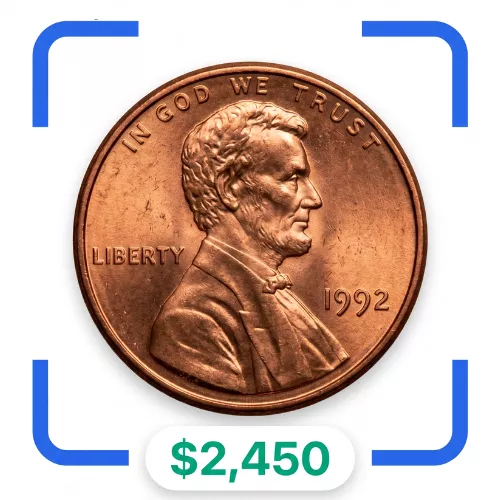


The Denver Mint struck this Lincoln penny back in 1987.
It carries the standard memorial reverse design used on cents for decades.
Like other pennies made after mid-1982, it has a solid zinc core covered by a thin copper plating.
The Denver Mint made billions of these coins for regular daily circulation.
Finding a common pocket change penny from 1987 is easy for any collector.
Finding one that kept its original bright red color without any damage is another story entirely.
A pristine example of this coin sold for $12,000 in an eBay Auction.
That winning bid was placed in May 2023.
Professional coin graders certified the piece at a nearly perfect grade of MS-69 Red.
The MS stands for Mint State, meaning the coin never saw any time in circulation.
On the standard grading scale, 70 is absolute perfection.
A grade of MS-69 means the coin looks flawless to the naked eye.
Even under five-times magnification, only one tiny, almost invisible flaw is allowed.
Collectors pay big money for certified coins that sit right at the top of the quality scale.
This particular coin is what numismatists call a condition rarity.
The 1987-D penny is not rare because of low production numbers.
The high value comes entirely from how hard it is for this specific alloy to survive without blemishes.
Copper-plated zinc coins from the 1980s are notorious for developing dark spots over time.
Moisture often gets through microscopic gaps in the plating and reacts with the zinc core.
This chemical reaction causes ugly zinc rot and surface bubbling on most surviving coins.
Most pieces tossed into jars or stored in paper rolls developed spots decades ago.
To qualify for the Red designation, a coin must show full, original copper luster across almost its entire surface.
Very few 1987-D cents managed to escape contact marks from the minting bins and avoid oxidation for decades.
When a registry set collector needs the single finest known specimen, prices can shoot way up.
You can start by looking closely at the front of your penny.
Check the date below Lincoln's bust to make sure it reads 1987.
Look directly below the date for the small letter D mint mark.
Next, you will want to weigh the coin on a small digital gram scale.
A zinc penny weighs right around 2.5 grams, unlike older bronze cents that weigh 3.1 grams.
Now check the surface color and quality under a strong light source.
You need a five-times magnifying glass or a loupe to inspect the details.
The coin must show a bright, glowing copper-orange color with zero dark spots or milky haze.
Look for any tiny scratches, bag marks, or carbon dots across Lincoln's cheek and the fields.
If you want a fast way to scan your change, you can use the Coin Value Checker app on your phone.
An app can help you sort out obvious circulated coins before you spend time on professional grading.
Keep in mind that ordinary pennies pulled from pocket change will not bring high auction prices.
Only an exceptional piece with zero visible wear and almost no flaws can achieve a top-tier grade.
Want to let software do the matching? our breakdown of each free coin identifier apps we tried is designed for it.
Upload a photo and get an instant value, grade estimate, and error check — no jargon, no sign-up required.