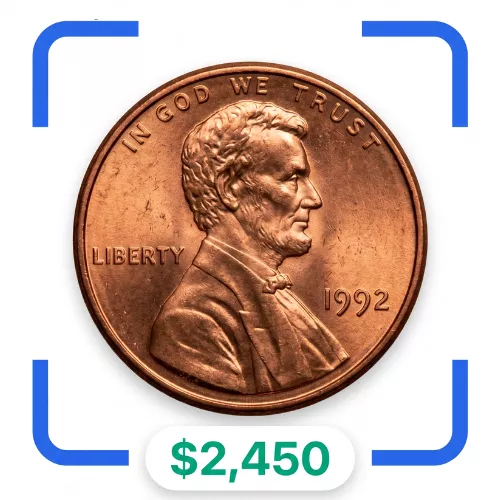


The Denver Mint struck this Lincoln cent in 1993.
It carries the familiar Memorial design on the back and Abraham Lincoln on the front.
By the 1990s, pennies were no longer made of solid bronze.
The United States Mint used a core made mostly of zinc and coated it with a thin layer of pure copper.
This coin has the full red color designation, meaning its copper surface never darkened or oxidized.
Billions of these pennies left the Denver facility for everyday circulation.
Most of them were spent right away and ended up scratched, dirty, or worn down in pocket change.
Finding an example that avoided all damage from the minting press to the bank is difficult.
A pristine example of this penny reached a major auction record in June 2010.
The coin sold through the auction house Bowers & Merena.
When the final bid came in, the winning collector paid $4,600 for the piece.
A professional grading service certified the coin at MS-69 Red before the sale.
The MS stands for Mint State, which means the coin never circulated in daily commerce.
On the standard 70-point grading scale, a grade of 69 is only one single point away from absolute perfection.
A certified grade this high requires nearly flawless surfaces with full original luster.
The high sale price reflects how tough it is to find modern zinc coins in this top-tier grade.
The Denver Mint produced huge volumes of pennies throughout the 1990s.
High production numbers usually mean a coin is very common and cheap.
The coin machinery moved at high speeds, which caused fresh coins to hit each other and leave tiny marks.
Zinc planchets also tend to develop spots or plating bubbles very quickly.
Because of those factory flaws, nearly every 1993 penny has minor defects straight out of the press.
Finding a survivor in MS-69 Red is a genuine statistical anomaly.
Serious collectors compete fiercely for top-graded pieces to complete registry sets.
That high-end collector demand drives the price into the thousands of dollars for an otherwise common date.
You need to look closely at a few specific details to check your coin.
Start by checking the date on the front right side of Lincoln.
Look directly underneath the 1993 date for a small "D" mint mark.
Weigh the coin on a small gram scale if you have one available.
A standard copper-plated zinc cent should weigh about 2.5 grams.
Inspect the copper surfaces under a bright light and good magnification.
The coin must show full, bright orange-red color without any dark brown spots, stains, or haze.
To reach a grade like MS-69, the coin cannot have contact marks, scratches, or visible bag hits anywhere on the design.
Only one trivial microscopic imperfection is allowed on the entire piece.
If you are sorting through loose change and need a quick first look, you can use CoinKnow or Coin Value Checker to get started.
Keep in mind that almost every penny from your pocket change is an ordinary circulated piece.
Only a professionally graded coin with nearly perfect surfaces will command thousands of dollars at an auction.
Want to let software do the matching? our breakdown of each free coin identifier apps we tried is designed for it.
Upload a photo and get an instant value, grade estimate, and error check — no jargon, no sign-up required.