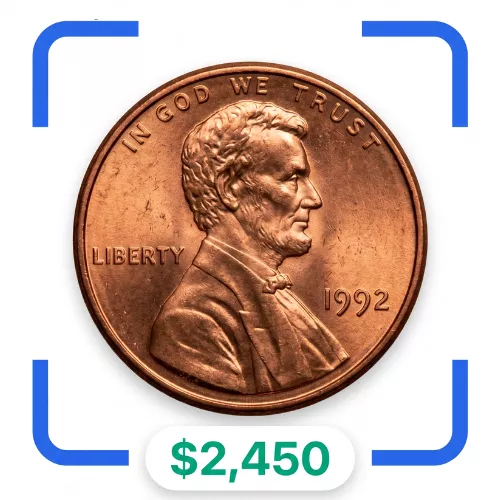


The Philadelphia Mint struck this copper-plated zinc Lincoln cent in 1993.
Billions of pennies were made that year to keep up with everyday commerce.
Like other modern cents, it has a zinc core with a thin outer layer of pure copper.
The "RD" label means the coin still shows its original, bright red luster.
Coins struck in Philadelphia do not carry a mint mark below the date.
Finding a standard 1993 penny in your pocket change is very common.
Finding one that survived without a single scratch or spot is an entirely different story.
A top-grade example of this coin sold for $3,375 in an eBay Auction.
The transaction took place in 2/22.
Professional coin graders certified the penny at the MS-69 Red level.
The Mint State scale runs from 60 up to a perfect 70.
An MS-69 grade means the coin is virtually flawless to the naked eye.
It allows for only one tiny imperfection under high magnification.
Collectors compete fiercely whenever a modern coin reaches this near-perfect status.
The high price for this penny comes down entirely to condition rarity.
The 1993 penny is not rare by mintage numbers alone.
The U.S. Mint produced these coins at high speeds using mass-production methods.
Freshly struck pennies bumped into each other on conveyor belts and inside large storage bins.
These impacts left contact marks, dings, and scratches on almost every piece.
Zinc planchets also tend to develop spots and plating blisters over time.
Because zinc reacts easily with the air, finding an untarnished red surface is difficult.
Just like its 1993 Denver counterpart, this coin is valued because it managed to escape all common manufacturing flaws.
Serious collectors building top-ranked registry sets are willing to pay big sums for this level of preservation.
Start by looking at the date on the front of the coin to confirm it says 1993.
Check the space directly below the date for a mint mark.
If there is no letter beneath the numbers, the coin was struck at Philadelphia.
A Denver coin from the same year will display a small letter "D" instead.
Weigh the penny on a small digital scale to verify it weighs around 2.5 grams.
Look at the color under good lighting to see if it still has full, bright copper-red surfaces.
Inspect both sides with a 10x magnifying glass to look for tiny bag marks, milk spots, or plating bubbles.
You can use a mobile tool like Coin Value Checker or CoinKnow to do a quick first pass on your coin.
Keep in mind that normal pocket change will not bring high auction prices.
Only coins that receive a near-flawless MS-69 grade from a major grading service reach this record level.
Want to price several coins in one sitting? Try which free coin identifier apps is worth installing.
Upload a photo and get an instant value, grade estimate, and error check — no jargon, no sign-up required.