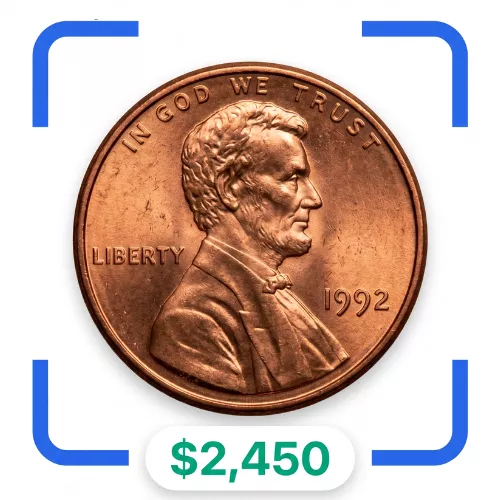


The Philadelphia Mint struck billions of Lincoln cents in 1994.
Most of these pennies are common pocket change made of copper-plated zinc with a full red finish.
A small number of them left the mint with a distinct hub error on the back.
Collectors refer to this specific variety as the 1994 Doubled Die Reverse, cataloged as FS-801.
It is one of the more famous modern doubled die errors in the entire Lincoln cent series.
While many collectors focus on the front of the coin, this piece stands out because the mistake happened on the reverse design.
Top-quality examples of this variety can bring serious money across the auction block.
An exceptional piece certified in MS-66 Red condition sold for $2,875.
The sale took place in June 2010 through the auction house Bowers & Merena.
An MS-66 grade means the coin is in brilliant uncirculated condition with very few contact marks or surface flaws.
The red designation indicates that the original bright mint luster has not darkened with age.
Coins in this pristine state are hard to find because modern zinc cents corrode and spot easily.
That combination of a rare die error and a high grade drove the strong bidding result.
A doubled die occurs during the die-making process when the hub strikes the die out of alignment.
Every coin struck by that prepared die inherits the exact same doubled pattern.
Doubled die reverse varieties often get less mainstream attention than front-facing doubled dies like the 1955 or 1972 pennies.
Specialist collectors still seek them out to complete serious variety registry sets.
The FS-801 variety shows clear, bold spread across key letters on the reverse.
Fewer collectors check the tails side of their change, so many of these coins went straight into circulation.
Finding one without heavy bag marks or dull oxidation is quite rare.
High collector demand paired with a tiny pool of near-perfect survivors keeps prices high at major sales.
Your average pocket piece will not match this record, but verified examples remain collectible in any grade.
You can check your own pennies at home using a few simple steps.
First, confirm that your coin is dated 1994 and has no mint mark below the date.
No mint mark confirms it was made at the Philadelphia Mint.
Turn the coin over to inspect the reverse side under bright light.
Grab a 10x jeweler loupe or a pocket microscope to get a clear view of the lettering.
Examine the text reading UNITED STATES OF AMERICA at the top of the design.
Look for rounded, raised thickness and separated letter tips rather than flat, shelf-like machine doubling.
You can use a phone app like CoinKnow or Coin Value Checker to take a first pass if you need quick visual confirmation.
True die doubling shows clear, distinct design elements raised in relief against the fields.
If the letters look cleanly doubled under magnification, you may have found an FS-801.
If you need a yes-or-no on whether to keep it, see the free coin identifier apps tools we tested side by side.
Upload a photo and get an instant value, grade estimate, and error check — no jargon, no sign-up required.