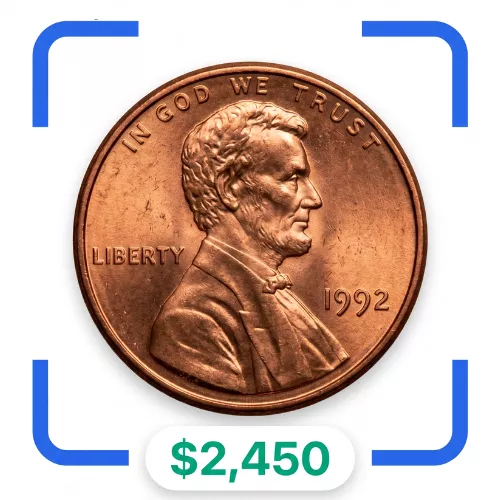


The Denver Mint struck millions of Lincoln cents in 1995.
Most of these pennies were standard copper-plated zinc coins made for regular circulation.
A small batch left the mint with an error on the front of the coin.
Collectors refer to this specific variety as a doubled die obverse, cataloged formally as FS-103.
The error happened during the hubbing process when the die received an extra, misaligned impression.
Every coin stamped by that die carried the exact same doubling.
Collectors often focus on the famous 1995 doubled die from Philadelphia, but Denver had its own distinct version.
This red cent stands out today as one of the most interesting modern Lincoln cent varieties struck in Denver.
A top-tier example of this variety crossed the block at Heritage Auctions in August 2019.
When the bidding ended, the coin sold for a record price of $4,200.
The coin was certified in MS-67 condition with a full Red designation.
An MS-67 grade means the coin has practically no bag marks or surface flaws.
The Red color code means the copper plating retained its original, bright mint luster without darkening over time.
Zinc cents from the 1990s often develop spots, oxidation, or plating blisters very quickly.
Finding an error coin that escaped circulation damage and preserved this level of perfection is rare.
Professional certification gave buyers the confidence to bid thousands of dollars for a modern penny.
The main value driver for this coin is a mix of die variety interest and strict condition rarity.
The 1995 Philadelphia doubled die made national news when people found it in pocket change.
Because the Philadelphia coin took the spotlight, many people overlooked the Denver strike.
As a result, far fewer high-grade Denver examples were set aside right away.
Cherrypickers cataloged this variety as FS-103 due to its strong, distinct spread.
Variety specialists actively compete for the highest-graded coins to complete registry sets.
While worn or low-grade examples trade for modest sums, pristine survivors command serious premiums.
The market pays a massive premium for coins that achieve an MS-67 grade with pristine red color.
This auction record reflects an elite specimen rather than what an average found penny would bring.
You need a good light source and at least a 10x jeweler loupe to inspect your penny properly.
First, check the date area below Lincoln portrait to make sure the coin reads 1995.
Look directly underneath the date for the small "D" mint mark representing Denver.
Next, focus your lens on the word "LIBERTY" on the left side of the obverse.
Look for clear, rounded secondary shelf lines on the letters rather than flat, shelf-like machine doubling.
Shift your focus up to the motto "IN GOD WE TRUST" along the top rim.
You should see distinct spread and extra thickness on the lettering throughout the motto.
Make sure you do not confuse true die doubling with strike doubling, which looks flat and shiny.
If you want a quick starting point, a mobile tool like Coin Value Checker can help you scan coins during an initial sort.
True doubled die coins show rounded extra contours that match the main design elements perfectly.
If you spot clear spread on both LIBERTY and the motto on a 1995-D cent, consider sending it to a grading service for official verification.
For a ballpark before you go further, take a look at our roundup of the best free coin identifier apps options.
Upload a photo and get an instant value, grade estimate, and error check — no jargon, no sign-up required.