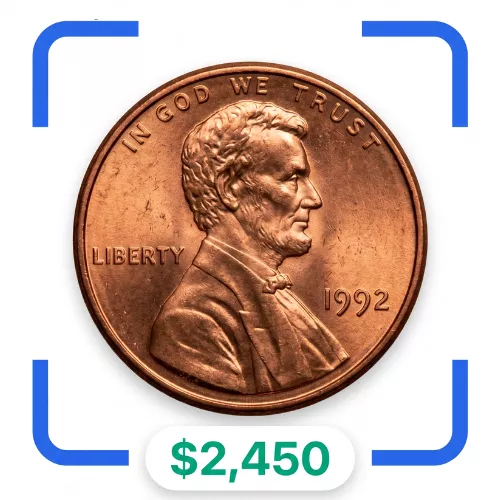


The Philadelphia Mint struck this Lincoln cent back in 1996.
Like other pennies from this era, the mint made it with a zinc core and a thin outer layer of pure copper.
You will not find a mint mark under the date on this coin.
Philadelphia did not use a "P" mark on regular cents, which is completely normal for this series.
Billions of these pennies rolled out of the mint to supply everyday pocket change.
Most of them went straight into circulation and suffered heavy wear right away.
The "RD" label means the coin kept its original bright red copper color instead of turning brown.
An extraordinary example of this penny sold for $2,500 in an eBay Auction.
That winning bid went down on 8/18.
The coin carried an elite grade of MS-68 Red from a top grading service.
The "MS" stands for Mint State, which means nobody ever spent the coin in daily commerce.
A grade of 68 on the 70-point scale means the coin is nearly flawless.
Finding a modern zinc cent with virtually zero contact marks is exceptionally tough.
Most 1996 pennies in change are only worth face value, but this certified piece set a huge benchmark.
This coin is not rare because of a low original mintage.
The high price comes down entirely to condition rarity.
Zinc pennies are notoriously difficult to preserve over long periods.
The copper plating is very thin, and the zinc core reacts easily with moisture and air.
Over time, most zinc cents develop dark spots, zinc rot, or milky stains.
High-volume minting machinery in the 1990s also left tiny nicks on most planchets before they even left the building.
Very few 1996 pennies managed to escape both factory bag marks and environmental damage.
Set registry collectors compete aggressively for top-grade coins to build the best possible modern collections.
That strong demand pushes the price of an MS-68 Red far above typical examples.
Start by checking the date on the front of the coin to confirm it reads 1996.
Look beneath the date to make sure there is no mint mark.
If there is a small "D" under the date, your coin came from Denver instead of Philadelphia.
Weigh the coin on a small digital scale to confirm the standard 2.5-gram zinc weight.
Inspect the surfaces carefully under a bright desk lamp with a 5x or 10x magnifying glass.
Look closely at Lincoln's cheek, jaw, and coat for tiny scratches or contact dings.
Check both sides for small black carbon spots or bubbly plating blisters.
To reach this level of value, the penny must show full, fiery red luster with no dull brown toning.
If you are not sure what you have, you can use CoinKnow to snap a quick photo and get a fast initial read on your penny.
Remember that worn pocket change from 1996 will not bring this kind of money.
Only professionally certified coins with near-perfect surfaces ever reach these record prices.
Photograph it and let the app do the rest — see this comparison of every free coin identifier apps worth trying.
Upload a photo and get an instant value, grade estimate, and error check — no jargon, no sign-up required.