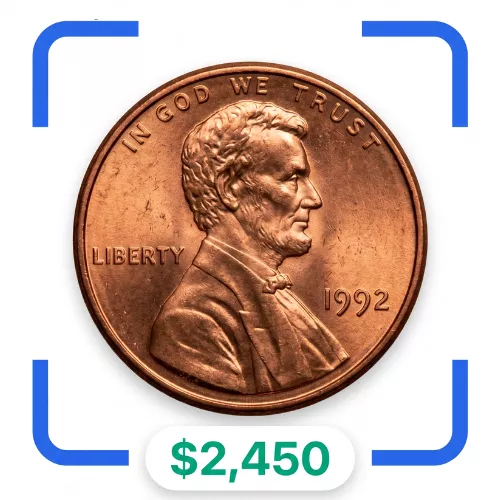


The United States Mint struck millions of standard pennies in Philadelphia in 1998.
These circulating Lincoln Cent coins carried no mint mark and were made with a copper-plated zinc planchet.
Most of them were struck using standard business-strike dies designed for regular pocket change.
A few dies intended strictly for collector proof coins were accidentally used to strike regular coins instead.
This mix-up created the 1998 Close AM RD Lincoln Cent variety.
The letters RD mean the coin still retains its original bright red copper luster without brown toning.
Finding a modern coin with an unintended die combination is what makes this issue stand out in the series.
A pristine example of this variety sold for $5,800 through an eBay Auction in November 2020.
The coin was certified by a professional grading service at the grade of MS-69 Red.
The Mint State 69 grade means the coin is virtually flawless to the naked eye and under low magnification.
Only one single point exists above it on the standard 70-point grading scale.
Reaching that grade on a modern circulating coin is extraordinarily difficult because normal handling leaves tiny marks.
The combination of an elite top-tier grade and a recognized die variety drove the bidding to that high sum.
Record prices like this one belong only to certified, near-perfect specimens.
The 1990s gave collectors several major Close AM varieties, but the 1998 issue has its own distinct market.
Mint workers prepared dies for San Francisco proof coins with tighter letter spacing on the reverse side.
When those proof dies ended up on regular Philadelphia presses, the Close AM coins entered general circulation.
The 1998 Close AM is known to be rarer than the famous 1992 version in most certified grades.
Because these coins were released straight into circulation, most were handled and developed scratches quickly.
Very few escaped damage long enough to be preserved in pristine mint state condition.
Strong collector demand for modern transitional errors keeps interest high whenever a top example appears.
A high-grade red coin with zero surface problems is genuinely tough to find for this year.
You can check any 1998 penny you find in your spare change with a basic magnifying glass or loupe.
Start by looking at the front of the coin to confirm the date is 1998 and there is no mint mark under the date.
Turn the coin over and look at the word AMERICA on the right side of the Lincoln Memorial.
Focus entirely on the bottom sections of the letters A and M.
On a regular 1998 cent, you will see a distinct gap separating the A and the M.
On the valuable Close AM variety, the bottom right leg of the A almost touches the bottom left leg of the M.
You can also use Coin Value Checker on your phone to get a quick first look if you need help spotting the difference.
Make sure not to confuse this variety with post-mint damage or heavy machine doubling that might blur the letters together.
If the letters are genuinely close and the gap is tiny, you may have found an authentic variety.
Want the number now and the reasoning later? See our roundup of the best free coin identifier apps options.
Upload a photo and get an instant value, grade estimate, and error check — no jargon, no sign-up required.