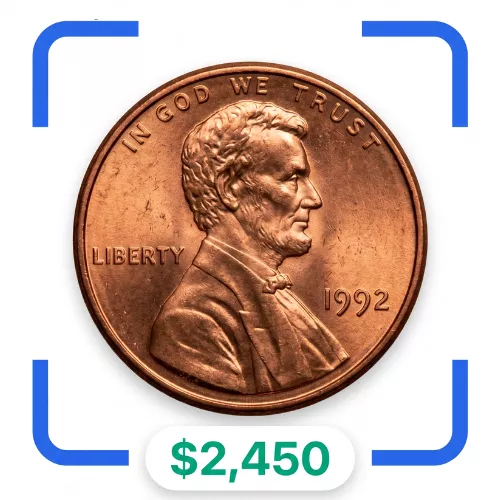


The Denver Mint struck this Lincoln Cent in the year 2000.
Modern pennies like this one feature a copper-plated zinc planchet.
The core is mostly zinc, but the coin shows a bright, original red copper surface.
The US Mint produced billions of Lincoln cents around the turn of the century.
Finding a regular strike from this run is very easy in everyday pocket change.
However, finding one that escaped every major flaw during production and shipping is a different story.
This particular piece represents a rare survivor that stayed in museum-like condition from the moment it left the dies.
In June 2010, the auction house Bowers & Merena sold this standout 2000-D cent.
The winning bidder paid $2,415 for the coin.
Professional grading services certified the penny at an extraordinary grade of MS-69 Red.
On the standard 70-point grading scale, a grade of 69 is practically flawless.
A coin with this grade can show only one tiny, trivial imperfection under close magnification.
The RD designation confirms that the coin retains its full, fiery original mint color across both sides.
Collectors compete fiercely for top-pop modern coins because higher grades simply do not exist.
This coin marks the entry point at rank 100 on the list of top valuable coins.
Even at the bottom of the top tier, modern condition rarities command strong four-figure prices.
The high price is not driven by an unusual error or a low original mintage.
Instead, the value comes down entirely to condition rarity.
Modern high-speed coin presses make billions of cents that bump into each other instantly.
These contact marks, along with plating bubbles and carbon spots, ruin the surfaces on nearly every coin.
Registry set collectors want the single finest known examples to complete their collections.
That collector demand pushes bidding on an MS-69 example well beyond normal expectations.
Start by looking at the obverse just below the date for a small "D" mint mark.
Verify the date reads 2000.
Turn the coin over to ensure it features the classic Lincoln Memorial reverse design.
A correct piece has a zinc core and weighs roughly 2.5 grams.
Check the surface color under a good desk light to confirm it has full, bright red copper luster.
Use a 10x jeweler loupe to scan both sides for hairline scratches, spots, or contact marks.
If you see heavy bag marks or dull brown toning, the coin will only trade for face value.
You can scan the coin with Coin Value Checker to get a fast first opinion on its grade range.
Remember that raw pocket change coins almost never achieve an MS-69 grade.
Only certified coins in flawless holders can reach this record auction level.
For an at-home value check, take a look at the free coin identifier apps picks that held up in testing.
Upload a photo and get an instant value, grade estimate, and error check — no jargon, no sign-up required.