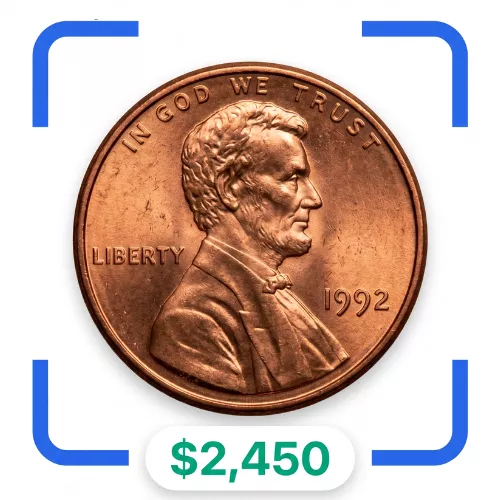


The United States Mint changed how it made annual collector sets in 2005.
Instead of packing standard business-strike coins into the uncirculated Mint Sets, officials switched to a special satin finish.
This 2005 Lincoln cent came from the Philadelphia Mint, meaning it carries no mint mark on the front.
The coin is struck in zinc with a thin copper plating, giving it a bright red color.
Collectors immediately noticed that these coins looked very different from regular pocket change.
The satin surface gave the Lincoln cent a smooth, matte glow across the entire design.
This method continued for several years, making the 2005 issue the first year of the modern satin finish era.
These pieces are categorized as Specimen strikes rather than regular circulation issues.
A top-graded example of this penny turned heads when it crossed the auction block.
Heritage Auctions sold a perfect specimen in December 2007 for an impressive $2,760.
The coin earned a flawless grade of SP-70 Red from PCGS.
In the grading world, a 70 is the highest score a coin can possibly receive.
An SP-70 grade means the coin has zero post-production imperfections under 5x magnification.
The Red designation means the copper surface still holds its original bright color without fading to brown.
Bidders competed aggressively because finding modern coins without a single microscopic mark is extremely rare.
Most coins from Mint Sets pick up tiny contact marks or spots during packaging.
The primary driver behind this high price is pure condition rarity.
The Mint produced plenty of 2005 Mint Sets, so the date itself is not rare.
What is rare is finding one that survived in absolute perfection.
These pieces resemble the Special Mint Set coins that the government made in the late 1960s.
The dies used to strike these cents received special sandblasting to create the distinctive texture.
Because copper is a soft and reactive metal, microscopic flaws form very easily.
Plating blisters, tiny carbon spots, and hairline scratches keep almost all submitted coins below the 70 threshold.
Registry set collectors want the highest grade on record, and they will pay high premiums for the top spot.
This record shows how high-end grading drives modern coin values.
You can identify this coin by looking closely at the date and surface texture.
Check the obverse below the date to make sure there is no mint mark, confirming it was struck in Philadelphia.
Look at the luster across Lincoln's portrait and the flat fields.
A satin finish coin does not have the harsh cartwheel luster of a normal pocket change penny.
It also lacks the deep, mirror-like background you see on a proof coin.
Instead, the surface looks velvety and soft under direct light.
Use a 5x or 10x jeweler's loupe to inspect the rim and fields for any tiny contact marks.
If you are sorting through loose coins and want a quick second opinion, scan the surface using Coin Value Checker to help confirm what you have.
Keep in mind that a loose coin from circulation will almost never grade at this top level.
Only an unblemished piece straight from an original 2005 Mint Set has a shot at a perfect certified grade.
For an immediate ballpark figure, take a look at the free coin identifier apps tools we tested side by side.
Upload a photo and get an instant value, grade estimate, and error check — no jargon, no sign-up required.