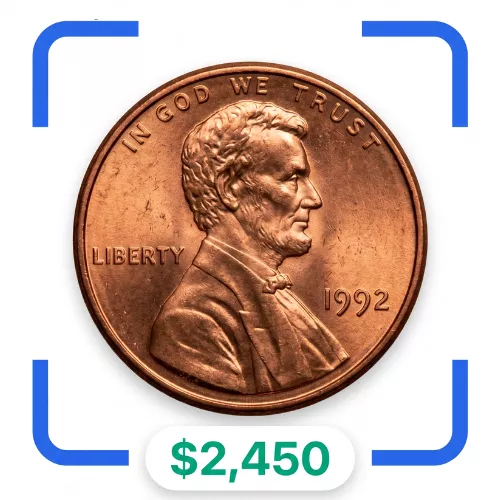


The United States Mint struck this Lincoln cent in 2008 at the Denver facility.
It carries the standard copper-plated zinc composition that the Mint began using back in 1982.
Collectors pay special attention to this specific issue because of what happened right after it.
This coin marked the final year of the classic Lincoln Memorial reverse design from Denver.
The Mint replaced the building motif in 2009 with four different bicentennial reverse designs.
That change makes this date the official swan song for regular-issue Memorial cents.
Coins with the RD label show full original red luster across both sides.
Finding a modern zinc cent from Denver in completely flawless shape is much harder than you might think.
A pristine example of this piece sold for an impressive $2,990.
Heritage Auctions handled the sale back in December 2008.
Professional coin graders certified the piece at a stunning Mint State 68 Red.
A grade of MS-68 means the coin is almost totally free of contact marks, spots, and strike flaws.
The RD designation confirms that the copper plating still shows bright, original fiery color without brown toning.
Most modern pennies leave the dies and immediately pick up tiny contact nicks in storage bags.
Top collectors compete aggressively when a modern coin achieves such a high technical grade.
A certified record like this represents a tiny fraction of the finest surviving pieces.
Billions of pennies left the Denver Mint in 2008, so the base date itself is not rare.
Instead, this high value comes entirely from extreme condition rarity.
Zinc-core cents are notorious for developing dark spots, plating bubbles, and corrosion over time.
Finding a specimen that survived with zero spots and razor-sharp surfaces is exceptionally rare.
Strong collector demand for end-of-era issues adds extra fuel to the fire.
Many numismatists build complete sets of Lincoln Memorial pennies and want the best possible example for the final year.
Because the Memorial design ended here, high-grade registry set builders pushed the price to record levels.
The high price reflects that perfectionist demand rather than raw scarcity from the Mint.
Start by looking at the date on the front right side below Lincoln's chest.
You should see the year 2008 paired with a small "D" mint mark right beneath it.
Turn the piece over to confirm the familiar Lincoln Memorial building design on the reverse.
Weigh the coin on a small digital scale to confirm the standard 2.5-gram zinc composition.
Use a 5x or 10x magnifying loupe to check the surface plating under good lighting.
Look closely for any zinc rot, black carbon spots, or dull brown oxidation on the bright surfaces.
If you want a quick starting point, a mobile tool like Coin Value Checker can help you inspect the basic design details on your phone.
Do not confuse ordinary pocket change with top-grade registry specimens.
A typical circulated piece pulled from pocket change will only be worth its face value of one cent.
Only flawless, fully red coins certified at the absolute top tier of the grading scale command four-figure prices.
Not sure where your coin lands on the chart? the free coin identifier apps tools we tested side by side sorts it out from a photo.
Upload a photo and get an instant value, grade estimate, and error check — no jargon, no sign-up required.